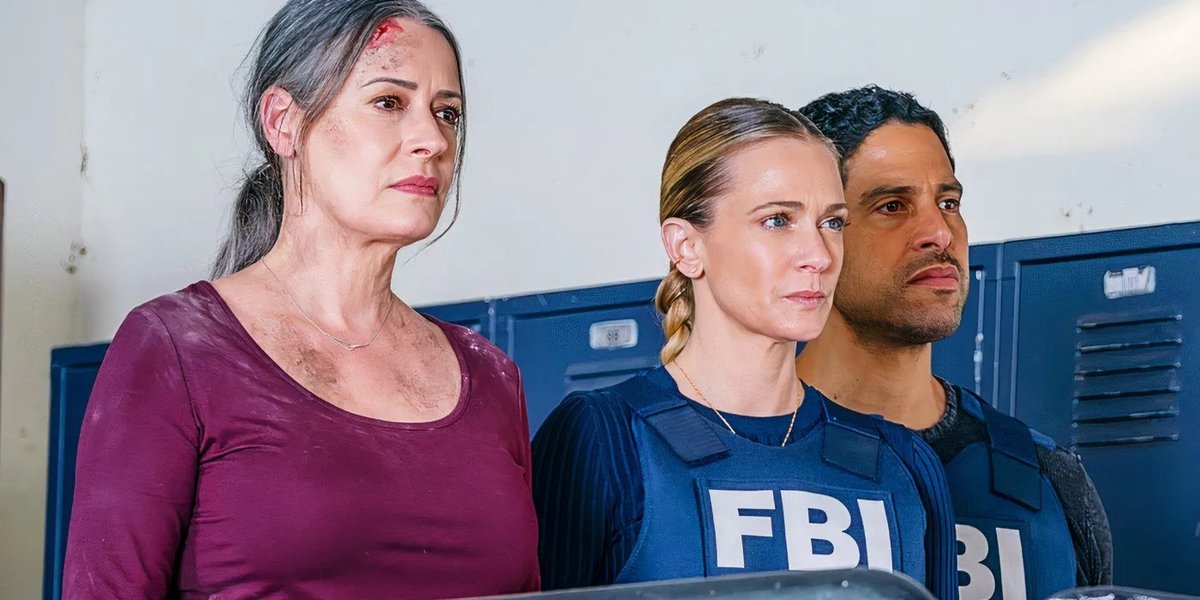
Criminal Minds Season 3 wasn't just another year for the BAU; it was a seismic shift, fundamentally altering the team's dynamics and pushing the boundaries of psychological profiling into darker, more personal territory. From the harrowing attack on one of their own to the unexpected departures and arrivals that reshaped the unit, this season explored not only the twisted minds of the unsubs but also the fragile resilience of the profilers themselves. If you're looking to dive deep into the chilling cases and pivotal character developments that define this unforgettable chapter, especially focusing on the Major Story Arcs & Villains in Criminal Minds Season 3, you've come to the right place.
At a Glance: What Defined Season 3
- Gideon's Heartbreaking Exit: The departure of a foundational character shakes the team to its core.
- Rossi's Grand Return: A legendary profiler steps out of retirement, bringing new dynamics and old cases.
- Prentiss's Tough Choices: Emily Prentiss faces personal and professional dilemmas, culminating in a significant decision.
- Garcia Under Attack: The team's beloved technical analyst becomes a victim herself, testing everyone's resolve.
- Hotchner's Leadership Tested: Internal and external pressures challenge Hotch's command and family life.
- A Gallery of Twisted Minds: From cult leaders to calculating spree killers, the unsubs are more complex and disturbing than ever.
- Darker Themes: The cases delve into more occult, psychologically damaged, and deeply personal criminal motivations.
The Shifting Sands of the BAU: Major Character Arcs
Season 3 masterfully wove intricate character arcs through its monster-of-the-week format, demonstrating that the profilers are just as human and vulnerable as the victims they seek to avenge. These internal struggles became as compelling as the hunt for any serial killer.
The Gideon Void: A Legacy's Lingering Shadow
One of the most profound shifts in Season 3 was the unexpected and emotional departure of SSA Jason Gideon. After a particularly brutal case involving a cult leader and the murder of his own girlfriend, Gideon reaches his breaking point. The weight of the evil he's witnessed, coupled with personal trauma, leads him to disappear, leaving behind his badge and a note for Reid. This wasn't just a character leaving; it was the psychological toll of the job manifesting in one of the most experienced members. His absence creates an immediate void, forcing the team, especially Hotchner and Reid, to grapple with the profound impact of their work and the cost of unwavering empathy. It also set a precedent for the high emotional stakes involved in the BAU's calling.
Rossi's Return: Bridging Eras of Profiling
Into the void left by Gideon steps SSA David Rossi, a founding member of the BAU who returns from a comfortable retirement. Rossi's re-entry isn't seamless. He's an old-school profiler, used to different methods and a different team dynamic, which initially clashes with the established rhythm of Hotchner's unit. His presence forces the team to adapt, learn, and question their own approaches. Rossi carries his own baggage, particularly two unsolved murders from 20 years prior in Indianapolis, a personal quest that drives much of his early character arc and cements his place back within the BAU. His return not only provides much-needed expertise but also offers a seasoned perspective on the emotional toll of the job, a quiet counterpoint to Gideon's dramatic exit.
Prentiss's Resignation: A Stand for Morality
Emily Prentiss, a character known for her quiet strength and mysterious past, faces a critical moral dilemma early in the season. When Hotchner is suspended by Supervisor Strauss, Prentiss makes a difficult decision, tendering her resignation to join the Foreign Service rather than betray a trust or compromise her principles. This move highlights the intense political pressures within the FBI and Prentiss's unwavering ethical compass. Though her departure is temporary, it underscores the constant threat of internal politics and how easily the team's cohesion can be jeopardized. Her actions reinforce the idea that integrity often comes at a personal cost.
Hotchner Under Siege: Leadership in Crisis
SSA Aaron Hotchner's leadership is put to the test repeatedly in Season 3. Not only does he navigate the shock of Gideon's departure and the integration of Rossi, but he also faces direct challenges to his authority, including a suspension by Supervisor Strauss. This internal conflict, coupled with the relentless demands of the job, strains his already fragile home life, hinting at the personal sacrifices made by those who lead the fight against evil. Hotch's quiet resolve and unwavering dedication to his team and mission solidify his role as the anchor of the BAU, even when everything around him seems to be crumbling.
Garcia's Trauma: When the Hunt Becomes Personal
One of the season's most gut-wrenching arcs involves Penelope Garcia, the quirky, brilliant technical analyst who is usually a source of lightheartedness and tech wizardry. Early in the season, during her first date, she is shot and left for dead. This harrowing event transforms Garcia from an observer to a victim, directly exposing her, and by extension, the entire team, to the brutal reality of their work. The hunt for her attacker becomes deeply personal, showcasing the team's profound loyalty and determination to protect one of their own. It's a stark reminder that no one is truly safe, not even within the supposed sanctuary of their own lives.
Unmasking the Darkness: Season 3's Key Unsubs and Cases
Season 3 continued Criminal Minds' tradition of presenting deeply disturbing and psychologically complex unsubs. From ritualistic cults to everyday monsters, the BAU faced a truly diverse and challenging roster of criminals. Each case not only profiled the killer but often reflected the internal state of the team, mirroring their vulnerabilities and strengths. If you're interested in understanding the nuances of how the BAU tackles these unique threats, you'll find plenty to analyze in this season.
The Occult & The Obsessed: Unsubs Driven by Twisted Beliefs
Florida: The Cult of Human Sacrifice
The season kicks off with the BAU investigating a series of serial killings in Florida, deeply entangled with the occult and satanic worship. The perpetrators are revealed to be part of a terrifying cult, believing their acts will grant them power or fulfillment. This case is particularly significant as it features Penelope Garcia's first date, which turns unexpectedly terrifying, setting the stage for her later, more direct victimhood. The profiling challenge lies in understanding the shared delusion and hierarchy within such a group, and how individual psychology merges with collective pathology.
Fredericksburg, Virginia: Echoes of Mutilation
In Fredericksburg, Virginia, the BAU confronts a series of mutilation murders that eerily mimic similar crimes from over two decades earlier. This case forces the team to consider the possibility of a legacy killer, someone either inspired by or directly connected to the original perpetrator. Profiling here involves not just understanding the current unsub's pathology but also tracing the lineage of their violent methodology, examining how trauma and learned behavior can span generations.
Urban Terror & Calculating Predators: Cases of Public Panic
New York City: The Random Shooter(s)
A terrifying wave of random shootings plagues New York City, leaving the BAU to determine if they're dealing with a single, highly indiscriminate serial killer or a more coordinated team of perpetrators. The urban sprawl and seemingly motiveless violence present unique challenges, requiring meticulous pattern analysis and an understanding of the psychological impact of terror on a metropolitan population. This case forces the team to consider the logistical nightmare of hunting an unsub who blends seamlessly into millions.
Denver: The Family Annihilator
Denver becomes the hunting ground for a chilling unsub responsible for home invasions resulting in the murder of entire families. The profiling suggests that the perpetrators may have a background of abuse within the foster care system, driven by a twisted sense of "correcting" perceived family dysfunction. This case delves into the profound, lasting scars of childhood trauma and how it can warp an individual's perception of family and justice.
Los Angeles: Gangs, Art, and Obsession
In Los Angeles, the BAU tackles a series of gang-related serial killings that may involve a famous comic book artist. This complex scenario blends street crime with the highly individualized world of art and fandom, suggesting a perpetrator whose motives might be rooted in a distorted sense of creativity or ownership. The team must navigate the intricate social structures of gangs while simultaneously profiling a killer who uses art as a medium for their violent fantasies.
Silver Spring, Maryland: The Silent Stalker
The team races against time in Silver Spring, Maryland, to identify a relentless stalker before they escalate to a violent attack. Profiling stalkers requires a deep understanding of obsessive personality disorders, boundary violations, and the predictable escalation of their fixations. This case is a study in preventative profiling, emphasizing the need to intervene before the ultimate crime occurs. Simultaneously, Hotch and Rossi consult on a battered woman syndrome murder case in Boston, highlighting different facets of domestic violence and self-defense.
Personal Demons & Lingering Scars: Unsubs with Deep-Seated Issues
Indianapolis: Rossi's 20-Year Cold Case
SSA David Rossi's return to the BAU is heavily influenced by his personal mission to finally solve two cold murders in Indianapolis that have haunted him for two decades. This storyline is deeply personal for Rossi, revealing his enduring commitment to justice and the lingering burden of unsolved cases. It's a powerful look at how a profiler's work can become intertwined with their own identity, blurring the lines between professional duty and personal quest. The case emphasizes the meticulous reconstruction of old evidence and the psychological resilience required to revisit past failures.
Miami: The Conflicted Identity Killer
In Miami, the BAU hunts a serial killer whose crimes suggest a deeply conflicted sexual identity. The violence is a manifestation of internal struggle, self-loathing, or a desperate attempt to assert control over a fractured self. Profiling such an unsub requires a sensitive yet incisive understanding of their internal world, moving beyond superficial motives to the core psychological turmoil driving their actions.
Dallas (Halloween): Rejection's Vengeance
On Halloween in Dallas, women become victims after meeting and rejecting men from a dating service. This case dives into the dark side of romantic rejection and narcissistic rage, where perceived slights escalate into deadly violence. The unsub here is likely someone with a fragile ego, using murder as a perverse form of reassertion of power. The profiling challenge is to identify the specific triggers and patterns of behavior associated with their online interactions and real-world encounters.
Portland: The Rootless Predator
In Portland, the BAU investigates the disappearances of people new to the city, individuals with no strong social ties. This unsub preys on vulnerability and anonymity, targeting those least likely to be missed immediately. The case highlights the importance of social connections in preventing crime and the unique challenge of profiling a predator who specifically seeks out isolated individuals, exploiting their lack of a support network.
Milwaukee: Hearts of Darkness
Women are found murdered in Milwaukee with their hearts crudely removed, pointing to a highly ritualistic and symbolically significant killer. This type of unsub often operates under a warped belief system, where the removal of organs serves a specific, often macabre, purpose—be it spiritual, retaliatory, or a grotesque form of possession. The BAU must decipher the symbolic language of the unsub's actions to understand their deeper psychological drives.
Flagstaff, Arizona: The Doubted Arrest
A serial killer targeting women at a small college in Flagstaff, Arizona, leads the BAU to a swift arrest. However, the team is plunged into doubt when another woman is killed while the suspect is in custody. This intense scenario forces the profilers to question their own judgment, re-evaluate their entire profile, and confront the possibility of a mistake or a highly sophisticated copycat. It's a compelling exploration of confirmation bias and the pressure of public expectations. For a complete look at all the dramatic turns, Explore Criminal Minds Season 3.
Twisted Family Ties & Unholy Alliances: Complex Group Dynamics
Shopping Mall: The Abducted Daughter
A young girl disappears from a shopping mall, leading the BAU into a complex family investigation. This type of case often reveals hidden family secrets, resentments, or a perpetrator who is intimately connected to the victim's inner circle. Profiling here involves untangling the web of relationships and identifying the unseen pressures or desires that could lead someone to abduct a child from within their own community.
Chula Vista, California: Witness Protection's Peril
In Chula Vista, California, a murdered teenager and an abducted best friend lead the BAU to investigate potential Witness Protection Program involvement. This adds a layer of intricate complexity, suggesting a killer who is either targeting someone from a protected past or using the program's vulnerabilities to their advantage. The team must navigate official protocols while piecing together a criminal profile that accounts for a victim with a deliberately obscured history.
West Bune, Texas: Teenage Spree Killers
A chilling case of spree killings in West Bune, Texas, involves a teenaged boy and his girlfriend. This highlights the dangerous dynamics of folie à deux or shared delusional disorder, where two individuals fuel each other's violent tendencies. Profiling such a duo requires understanding the dominant and submissive roles, the shared fantasy, and the triggers that push them into a joint descent into violence.
Montana: The Identity Thief Killer
Four kidnapped and murdered women in Montana lead the BAU to a man who has apparently assumed the identity of his dead partner. This case delves into the psychology of identity theft, manipulation, and how a killer can hide in plain sight by inhabiting another's life. The team must reconstruct the true identity of the unsub by peeling back layers of deception and understanding the motivation behind such an elaborate masquerade.
Unconventional Methods & Unsettling Motives: The Season's Outliers
Philadelphia: The Self-Storage Secret
Murders in Philadelphia are linked to the contents of a self-storage unit purchased at auction, requiring the BAU to profile the killer based on the items they owned and discarded. A local agent becomes central to the case. This unique challenge tests the team's ability to "read" an individual through their material possessions, inferring personality traits, fixations, and patterns of behavior from seemingly mundane objects. It's a fascinating look at forensic archaeology meeting psychological profiling.
Roanoke, Virginia: Brain Fingerprinting & Cold Cases
A 4-year-old case is reopened in Roanoke, Virginia, after a suspected serial killer wakes from a coma. The BAU employs "brain fingerprinting" technology to determine if he retains memory of the crimes. This cutting-edge method introduces an ethical and investigative dilemma, pushing the boundaries of traditional profiling. It's a compelling blend of neuroscience and criminal psychology, asking how much we can truly ascertain from a damaged mind.
Pittsburgh: The Angel of Death
In Pittsburgh, an unusually high suicide rate appears to be the work of an "Angel of Death," someone who subtly coerces or directly facilitates the deaths of vulnerable individuals. This unsub is particularly insidious, often seen as a helper or confidant, making their motives difficult to unravel. The BAU must profile a killer who preys on despair, manipulating their victims' last wishes or vulnerabilities.
The Lasting Impact of Season 3
Criminal Minds Season 3 remains a pivotal and often heartbreaking chapter in the series. It wasn't just about catching the bad guys; it was about the profound cost of that pursuit on the individuals dedicated to it. The season highlighted the team's professional brilliance and their deeply human vulnerabilities, making the profilers themselves as compelling as the unsubs they pursued.
The intense focus on character development, particularly with the introduction of Rossi and the emotional upheaval surrounding Gideon and Garcia, deepened the show's emotional core. It demonstrated that even the most seasoned profilers are not immune to the horrors they witness and combat every day. The unsubs, too, reached new levels of complexity, forcing the BAU to delve into the most obscure corners of human psychology.
This season challenged the BAU, pushing them to grow, adapt, and ultimately, rely on each other more than ever. It solidified the team's bond, not just as colleagues, but as a family bound by shared trauma and unwavering dedication to justice.
Revisit the Profiling Masterclass
Season 3 of Criminal Minds stands as a testament to compelling storytelling and deeply psychological exploration. Whether you're a long-time fan or new to the BAU's world, revisiting these episodes offers a powerful insight into the complexities of criminal psychology and the extraordinary resilience required to face humanity's darkest impulses. Pay close attention to the subtle shifts in team dynamics, the evolving relationships, and how each profiler copes with the relentless exposure to evil. You'll find a masterclass in tension, character, and the human cost of fighting crime.